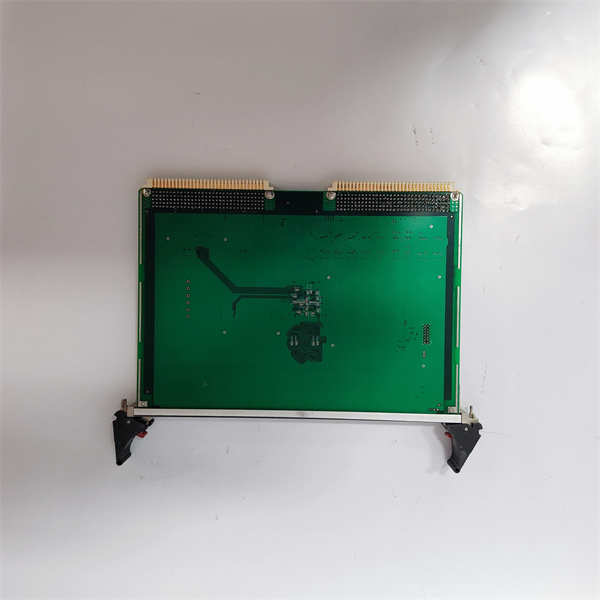

The GE ESM10A is a critical system module designed for the General Electric EX2100e excitation control system. This integral component plays a vital role in regulating the generator field current, ensuring stable terminal voltage and reactive power output for synchronous generators in power plants.
In a large gas turbine power plant, maintaining grid stability requires precise control of the generator's excitation current. The GE ESM10A module, housed within the EX2100e control cabinet, continuously monitors generator voltage and current. It processes this data and adjusts the output to the thyristor bridges that supply the generator's rotor. The reliability of the ESM10A ensures that the generator can quickly respond to grid disturbances, such as sudden load changes, thereby maintaining voltage stability and preventing wide-area blackouts. Its robust design is essential for withstanding the high electrical noise environment of a power generation facility.
Main Parameters | Value/Description |
Product Model | GE ESM10A |
Manufacturer | General Electric (GE) |
Product Category | Excitation System Module |
Parent System | GE EX2100e Excitation Control System |
Primary Function | Generator voltage regulation and field current control |
System Voltage | Designed for various generator field voltage and current ratings |
Control Modes | Automatic Voltage Regulator (AVR), Field Current Regulator (FCR) |
Protection Features | Integral part of system-level protection (Over-excitation, Under-excitation) |
Communication Interface | Integrated with EX2100e controller for data exchange |
Cooling Method | Relies on the EX2100e cabinet's cooling system |
The GE ESM10A is engineered as a key component within the sophisticated EX2100e architecture, offering distinct advantages:
· •Innovation Point 1: Integrated System Control Logic: The ESM10A embodies core control algorithms for the excitation system. It works in concert with the main processor to execute precise Proportional-Integral-Derivative (PID) control loops for voltage and current regulation. This integrated approach ensures fast response times and stable operation under all generator loading conditions.
· •Innovation Point 2: Robust Power Stage Interface: The module is designed to reliably interface with and control the high-power thyristor stacks that convert AC power to DC for the generator field. Its design includes necessary conditioning and isolation to handle the high voltages and currents present, ensuring accurate firing pulse generation and system safety.
· •Innovation Point 3: Comprehensive Diagnostic Monitoring: A key feature is its role in the system's health monitoring. The ESM10A facilitates continuous diagnostics of the excitation system's key parameters, allowing for early detection of potential issues. This enables predictive maintenance, helping to avoid unplanned generator outages and maximizing asset availability.
A hydroelectric plant was experiencing occasional voltage oscillations during peak load periods, which threatened grid compliance. An analysis pointed to sluggish response in the legacy excitation system. An upgrade to the GE EX2100e system, with the GE ESM10A as a core component, provided superior control algorithms and faster processing. The enhanced regulation capability of the new system, driven by modules like the ESM10A, dampened the oscillations effectively. This resulted in improved power quality, ensured compliance with grid codes, and enhanced the plant's reputation as a reliable electricity provider.
The GE ESM10A functions as part of a complete excitation system. Essential related components include:
· •GE IS420ESWBG3A: A controller or communication module within the EX2100e rack that works closely with the ESM10A for overall system management.
· •GE EX2100e Power Module: The thyristor-based power unit that converts AC to DC; it is controlled by signals from the ESM10A.
· •GE HCPI Board: A High Current Power Interface board that may act as an intermediary between the control modules and the power stage.
· •GE EX2100e User Interface Module: Provides the local HMI for operators to monitor and adjust excitation system parameters.
· •GE Field Flash Module: Provides the initial DC current to establish the generator's magnetic field during startup.
Installation of the GE ESM10A module must be performed by qualified GE service engineers as part of the EX2100e system. It involves inserting the module into its designated slot in the system rack and ensuring all connectors are securely fastened. Strict adherence to electrostatic discharge (ESD) procedures is critical.Routine maintenance is primarily system-based, leveraging the EX2100e's extensive diagnostic capabilities to monitor the health of the ESM10A and other components. Periodic inspections should verify the integrity of connections and the condition of the cabinet cooling system. We provide comprehensive lifecycle support, including technical documentation, firmware updates, and expert troubleshooting services to ensure the long-term reliability and performance of your excitation system.
 扫一扫咨询微信客服